Over 35 years of independence, Uzbekistan’s economy has undergone a large-scale transformation. One of the key directions of this process has been the gradual shift from the state’s role in managing a large volume of assets towards creating conditions in which private capital, entrepreneurship and investment play the leading role.
Significant reforms have taken place in the management of state assets and privatization. The results of this transformation are already reflected in concrete indicators. These processes have been given a strong legal foundation. In 2023, the new Law “On State Property Management” was adopted, followed in 2024 by the Law “On Privatization of State Property.”
The volume of privatization increased 55-fold
In recent years, the scale of state asset privatization has increased significantly.
While proceeds from privatization amounted to only UZS 1.1 trillion over the 10-year period preceding 2020, this figure reached UZS 77.6 trillion in 2020–2025.
Modern mechanisms aligned with international best practices are being introduced into the privatization process. In particular, based on the “sell or explain” principle, the number of enterprises with state participation was reduced by 61% in 2021–2025.
Private capital is being attracted to major state assets
Significant results have also been achieved in attracting private and foreign capital to the economy through the privatization of large and strategic assets.
In particular:
Coca-Cola Uzbekistan was sold for USD 252 million, Ipoteka Bank for USD 324 million, while a 75.2% state share in the Samarkand Automobile Plant was sold for USD 80 million.
Such transactions demonstrate the practical results of efforts to ensure the efficient management of state assets, attract private investors and reduce the state’s participation in the economy.
A modern real estate services market is taking shape
In 2026, the new Law “On Realtor Activities” was adopted, providing for a transition to a more transparent and digital model of market regulation. The law introduces a Unified Register of market participants and a multiple listing system, which will enable real estate agents to provide services based on a “one-stop shop” principle and simplify interaction between buyers, sellers and other market participants.
Real estate agencies will be able to provide services related to real estate transaction support, organization of sales, fiduciary management, as well as information, consulting and advertising services.
Activity in the land market is also increasing
Positive dynamics are also being observed in the use and privatization of land plots. In 2022–2025, the volume of land plots offered and sold at auctions on the basis of ownership and lease rights increased almost fourfold.
In the first half of 2026, 1,800 hectares of land were sold. This significantly exceeds the annual figure recorded in 2022.
In addition, the number of applications submitted by individuals and legal entities for the privatization of non-agricultural land plots increased almost fivefold compared with 2022.
Around 1.5 million assets have been put up for auction through E-auksion
The use of digital mechanisms in the sale of state assets is expanding.
To date, around 1.5 million assets have been put up for auction through the E-auksion electronic trading platform, of which more than 1.2 million have been sold.
A number of new mechanisms have been introduced to expand entrepreneurs’ opportunities to acquire state assets. These include installment payment options, discounts available under established conditions, as well as long-term leases of state property with the option of subsequent direct purchase.
Further reduction of state participation planned by 2030
At the next stage of the reforms, one of the key priorities will remain increasing the share of the non-state sector in the economy and reducing state participation.
By 2030, the share of the non-state sector is planned to reach 85%, while the number of enterprises with state participation is expected to decrease almost sixfold.
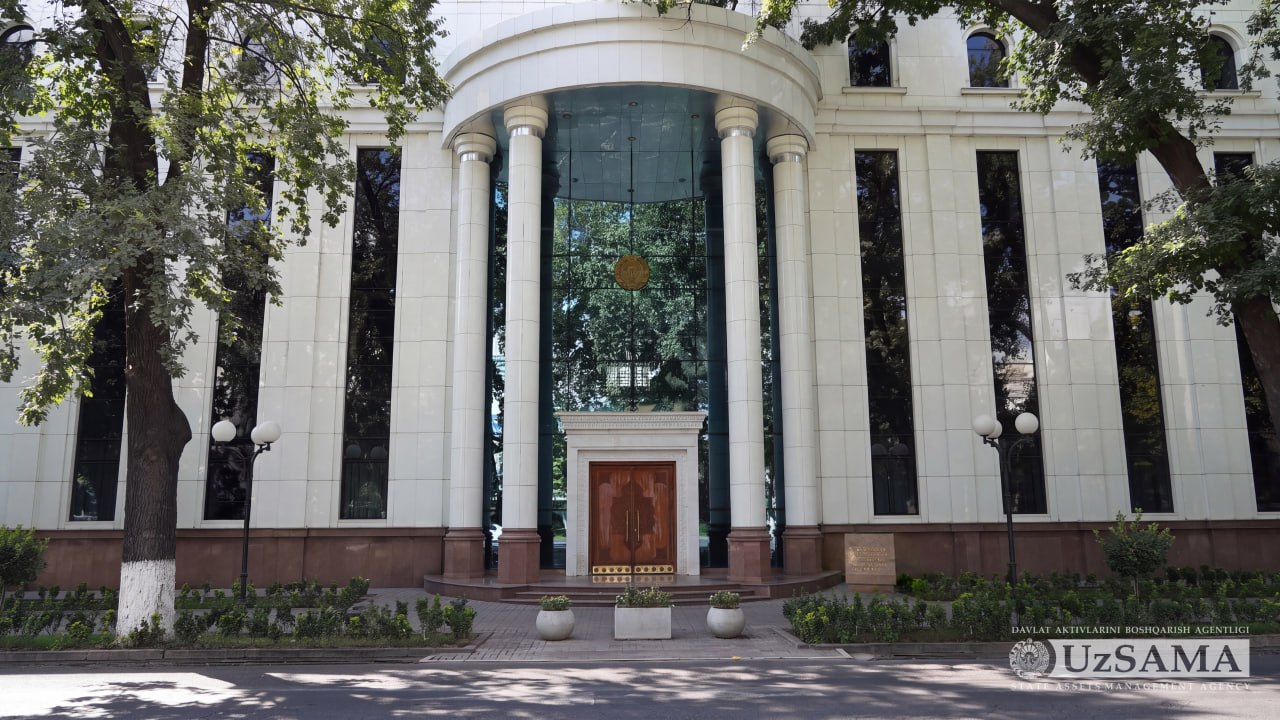
The reforms implemented by the State Assets Management Agency are aimed at ensuring the efficient use of state property, increasing the transparency of privatization processes, attracting private capital and investment, and creating new opportunities for entrepreneurship.
Press Service of the
Agency for Management of State Assets